Microsoft 365 Business Standard
Business Standard provides the core productivity tools most small and medium businesses need. It includes the full Office apps (Word, Excel, PowerPoint, Outlook), Teams, OneDrive and SharePoint. Ideal for everyday collaboration and communication. It remains the most popular entry point for SMEs that want essential business apps without advanced security requirements.
Microsoft 365 Business Premium
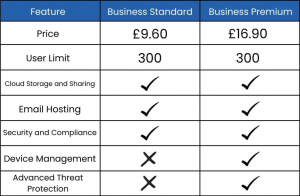
Business Premium includes everything in Business Standard plus advanced security and device management. It adds Microsoft Intune, Azure AD Premium P1 and Microsoft Defender for Business, making it a better fit for companies that need stronger security or manage remote devices. For organisations with compliance obligations or hybrid teams, Premium offers a measurable uplift in protection and control.
Key Differences Explained
1. Security and Identity Protection
The biggest difference is security. Business Premium includes tools like Azure AD Premium P1, Conditional Access and Microsoft Defender for Business, giving you stronger identity protection, MFA controls and threat detection. Business Standard does not include these advanced protections. This gap is often the deciding factor for businesses that handle sensitive data or operate across multiple locations.
2. Device and App Management (Intune)
Business Premium adds Microsoft Intune, which lets you manage and secure laptops, phones and apps, perfect for remote or hybrid teams. With Business Standard, you receive basic security but no centralised device management. Intune also helps reduce data loss by enforcing policies across every device that accesses company information.
3. Advanced Threat Protection
Business Premium includes built-in protection against ransomware, malware and phishing. Business Standard lacks these advanced defensive features, meaning you may need separate third-party security tools. Premium consolidates this technology into one platform which reduces cost, complexity and the risk of gaps between multiple vendors.
Security Risks Without Premium
Sticking with Business Standard may seem the most cost effective option but it leaves gaps that cybercriminals exploit:
- Higher Risk of Breaches: Without advanced threat protection, phishing and ransomware attacks can slip through.
- Compliance Challenges: Businesses handling sensitive data may fail to meet security standards, risking fines under GDPR.
- Device Vulnerabilities: Remote or hybrid teams using unmanaged devices increase exposure to malware and data leaks.
- Financial Impact: According to the most recent government report, the average cost of a data breach for SMEs is £75,000. Much greater than the cost of the premium upgrade.
These risks highlight why many SMEs now start with Business Premium rather than treating security as an optional add-on.
Use Cases and Scenarios
Business Standard – When It Makes Sense:
- A small local business with all staff working on-site and minimal sensitive data.
- Companies that already have third-party security and device management solutions in place.
- Organisations focused on productivity tools without complex compliance requirements.
Business Premium – The Better Choice For:
- Businesses with remote or hybrid teams needing secure access to company resources.
- Companies handling sensitive client data (legal, healthcare, finance) where compliance is critical.
- Growing SMEs that want an all-in-one solution for productivity, security and device management without juggling multiple vendors.
- Any organisation that wants to reduce risk and avoid costly breaches by leveraging Microsoft’s built-in advanced security stack.